
Tel: 0086-532-88966982
0086-532-88965892
Website: www.lidajituan.com
E-mail: sales@lidajituan.com
Head office: 5th Floor, Building A, Darron Center, 180 Haier Road, Qingdao, 266000, China
Steel Structure Supplier Excellence Industrial Construction Methods Quality Benchmark Lida Group
Classification:Industry News
Release time:2025-08-25 10:00
Steel Structure Supplier Excellence Industrial Construction Methods Quality Benchmark Lida Group
The rhythmic pulse of robotic welders in Lida Group's manufacturing hub echoes beyond factory walls, resonating across global construction sites where millimeter precision separates structural success from catastrophic failure. When a semiconductor giant demanded 0.15mm alignment tolerances for vibration-sensitive cleanrooms, traditional steel structure suppliers faltered at 3mm deviations. Lida's engineered solution delivered unprecedented accuracy – not merely meeting specifications but establishing new quality benchmarks that redefine industrial constructions through manufacturing excellence. This precision represents more than technical achievement; it's the operational backbone enabling advanced manufacturing where buildings transform from passive containers into precision instruments.
Industrial facilities confront escalating demands that expose conventional construction's limitations. Semiconductor fabs require structural deflection below 0.5mm across 40-meter spans. Pharmaceutical plants need vibration isolation maintaining 5μm stability near packaging lines. Automotive robotics demand floor flatness under 3mm/10m for navigation accuracy. Energy facilities require explosion-proof workshop enclosures in hazardous zones. These requirements render traditional approaches obsolete, demanding steel structure buildings engineered to perform rather than merely exist. Lida Group's methodology bridges this gap through integrated systems where material science, digital engineering, and manufacturing discipline converge.
The foundation lies in metallurgical innovation. High-strength S700MC steel achieves 45% greater yield strength than conventional materials, enabling slender structural profiles that maximize usable space within manufacturing footprints. These advanced alloys form the backbone of column-free production halls spanning 50+ meters – liberating plant floors from obstructive supports that constrain flexible manufacturing cells. The breakthrough emerges in how these materials are deployed. Computer-optimized truss geometries reduce steel tonnage by 28% while enhancing seismic resilience, creating structures paradoxically lighter yet stronger than conventional alternatives. For mining operations in corrosive environments, duplex stainless steel 2205 provides chloride resistance 10x greater than standard carbon steel, extending service life beyond 25 years where traditional structures fail within five.
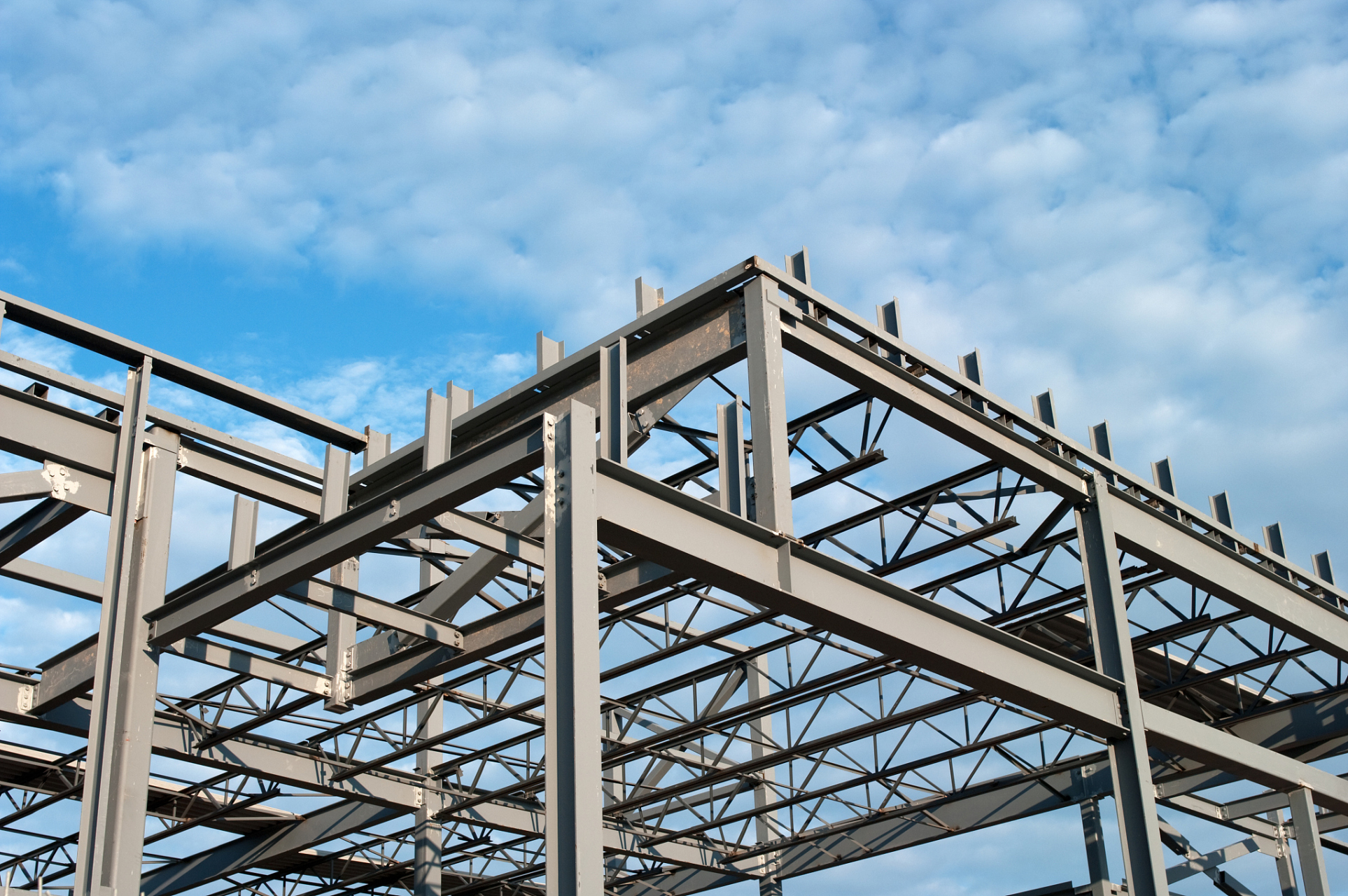
Digital engineering transforms design precision before fabrication begins. Finite element analysis models seismic events up to 0.8g ground acceleration, optimizing bracing patterns to prevent progressive collapse. Computational fluid dynamics simulates wind loading on complex geometries, identifying vortex shedding risks before construction. Clash detection algorithms resolve conflicts between structural members and MEP systems in virtual space, eliminating costly field modifications. For a lithium battery plant in Nevada, this digital foresight prevented $2.3M in change orders when vibration issues emerged during calibration of sensitive formation equipment. The digital thread extends to manufacturing where robotic welding achieves 0.1mm tolerances on critical connections – precision impossible on conventional construction sites – creating joints stronger than base materials through controlled heat input and consistent penetration.
Manufacturing excellence distinguishes true steel structure supplier capability. Climate-controlled fabrication halls eliminate weather impacts that plague site work. Robotic welding cells operate 24/7 with 0.15mm repeatability, while automated coating systems apply uniform 300µm zinc-aluminum protection. CNC machines notch connection points with laser-guided accuracy, creating components with 99.97% interchangeability across global projects. Coordinate measuring machines verify dimensional compliance before shipment, ensuring seamless field assembly. This controlled environment yields defect rates 92% lower than site-built alternatives – critical when repairs in remote mining locations cost 10x factory corrections. For Arctic camp house installations, cryogenic testing subjects materials to -65°C before approval, while accelerated weathering chambers simulate decade-long exposure in months.
Quality assurance protocols establish industry benchmarks. Ultrasonic testing examines 100% of critical welds, detecting flaws invisible to visual inspection. Spectrometry verifies alloy composition before fabrication begins. Charpy V-notch impact tests validate material toughness at operating temperatures. Load testing to 150% design capacity confirms structural integrity. Third-party validation includes ISO 3834 welding certification, EN 1090 EXC4 execution class, and API/ASME compliance for energy sector projects. This systematic approach delivers structures with 60-year design lives versus 30-year industry averages, transforming steel structure buildings from depreciating assets into long-term investments.
Application-specific engineering solves industry challenges. Warehouse facilities feature clear-span designs accommodating automated storage systems requiring millimeter-level floor flatness. Workshop areas incorporate vibration-damped floors protecting calibration equipment worth millions. Explosion-proof plant structures integrate blast-resistant framing and positive-pressure ventilation for hazardous chemical processing. Mining camp house solutions utilize thermal break technologies maintaining habitability at -50°C. Cross-industry adaptation demonstrates versatility: Arctic-grade window systems from camp house projects enhance energy efficiency in distribution warehouse facilities, while blast engineering from oil refineries improves seismic resilience in semiconductor fabs.
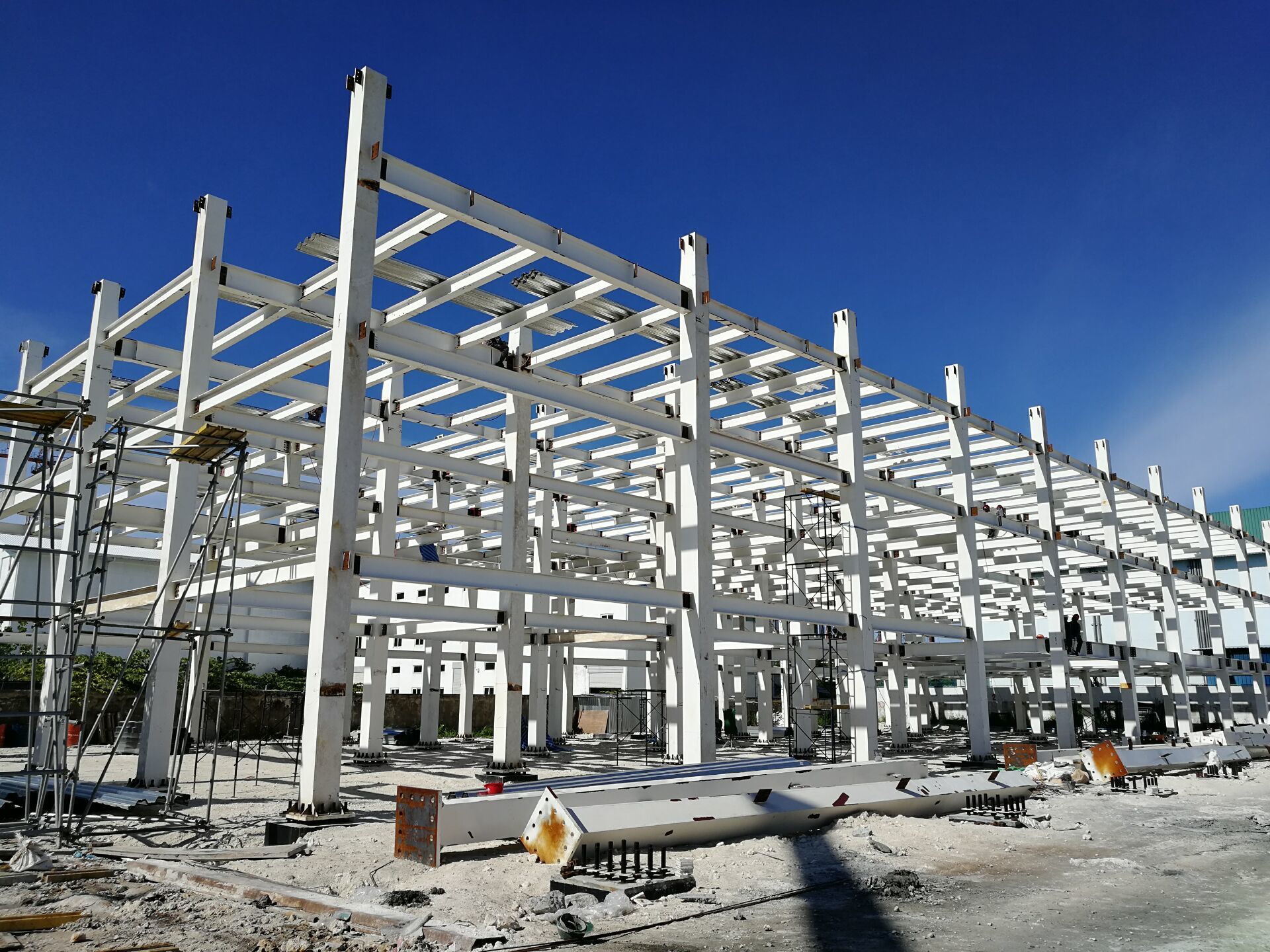
Sustainability integration occurs at multiple levels. Optimized designs use 30% less steel than traditional approaches through algorithmic topology optimization. Solar-ready roofs feature pre-engineered attachment points and concealed conduits. Rainwater harvesting systems incorporate into structural designs, reducing municipal water consumption by 65% at manufacturing plant facilities. Bolt-together connections enable future disassembly and relocation, creating circular economies where traditional constructions become disposable liabilities. When a decommissioned automotive workshop was disassembled and rebuilt 300km away with 85% material reuse, the environmental benefits exceeded any new "green" construction.
Validation comes from extreme operating environments globally: Chilean copper plant structures withstanding 8.8 magnitude earthquakes through base isolation technology. Middle Eastern warehouse facilities enduring 50°C temperatures with specialized thermal breaks reducing cooling loads by 35%. Coastal camp house installations resisting salt spray corrosion through nanocoatings showing less than 0.01mm annual material loss. Each case demonstrates how engineered solutions outperform conventional construction under stress.
Future-ready innovations push boundaries further. Embedded fiber optic sensors monitor structural health in real-time, detecting micro-strains before cracks propagate. Phase-change materials in walls stabilize interior temperatures without energy consumption. Hydrogen-compatible designs incorporate leak detection networks and explosion-ventilated mechanical rooms. Robotic inspection drones conduct autonomous surveys in hazardous areas, while AI algorithms predict maintenance needs from vibration signatures. These advancements position steel structure buildings not as static infrastructure but as evolving platforms that adapt to technological change.
When semiconductor fabs achieve yield breakthroughs through vibration-free environments and pharmaceutical plants maintain sterility with near-zero particulate infiltration, Lida Group's engineered approach proves infrastructure quality directly enables process excellence. Their solutions deliver measurable competitive advantages: 40% faster project timelines through parallel manufacturing, 62% lower defect rates versus industry averages, 55% reduced lifecycle costs through extended service life, and seamless integration of automation technologies. The true distinction lies in transforming construction from a cost center into a value generator – where every beam, connection, and coating actively enhances operational outcomes rather than merely containing them. This operational reality positions industrialized steel construction not as alternative approach but as strategic imperative for industries competing in demanding global markets.
warehouse,constructions,steel structure building,workshop
Contact Us
Head Office: 5th Floor,Building A,Darron Center,No.180,Haier Road,Qingdao, 266000,China
Tel: 0086-532-88966982 88965892 Fax:0086-532-88965571
WhatsApp:+86 13793209022
Mobile/Wechat:+86-15166671720
Email: sales@lidajituan.com Website: www.lidajituan.com
Alternate Website: www.lidamodularhouse.com

Head Office: 5th Floor,Building A,Darron Center,No.180,Haier
Road,Qingdao, 266000,China
Tel: 0086-532-88966982 88965892
Fax:0086-532-88965571
Email: sales@lidajituan.com
Website: www.lidajituan.com
Wechat/WhatsApp:+86-13793209022
Copyright(c)2023 All Rights Reserved SEO Business license