
Tel: 0086-532-88966982
0086-532-88965892
Website: www.lidajituan.com
E-mail: sales@lidajituan.com
Head office: 5th Floor, Building A, Darron Center, 180 Haier Road, Qingdao, 266000, China
Prefab Office Container Buildings for Oil & Gas Field Operations
Classification:Industry News
Release time:2025-03-28 00:00
Prefab Office Container Buildings for Oil & Gas Field Operations
Introduction
The oil and gas industry operates in some of the world’s most remote and challenging environments, from scorching deserts to Arctic tundras. Traditional construction methods often fall short in delivering functional, durable, and quickly deployable workspaces for these demanding settings. Enter prefab office container buildings—a revolutionary solution merging the portability of container houses with the precision of modular house engineering. These structures are redefining field operations by providing scalable workspaces that meet the logistical, safety, and efficiency needs of oil&gas projects. This article explores their design innovations, industry-specific applications, and why they’re becoming the backbone of modern energy sector infrastructure.
1. The Unique Challenges of Oil & Gas Field Operations
Oil and gas projects require infrastructure that can withstand:
- Extreme Weather: Temperatures ranging from -40°C to 50°C.
- Remote Logistics: Limited access to construction materials and skilled labor.
- Rapid Deployment: Tight project timelines demand structures that can be operational within weeks.
Traditional brick-and-mortar offices are impractical in such conditions. This is where prefab house designs shine, offering a turnkey alternative that aligns with the industry’s need for speed and resilience.
2. Why Prefab Office Containers Are Ideal for Oil & Gas
A. Mobility and Modularity
Unlike permanent container buildings, prefab office containers are designed for easy relocation. Their modularity allows companies to:
- Scale operations up or down by adding/removing units.
- Reuse structures across multiple projects, reducing costs. For example, Lida Group’s office container systems deployed in Saudi Arabia’s Ghawar Field were later repurposed for offshore drilling in Norway.
B. Customized Functionality
These units are tailored to serve diverse roles:
- Command Centers: Equipped with IT infrastructure, meeting rooms, and real-time monitoring systems.
- Labs and Workshops: Built with chemical-resistant flooring and explosion-proof wiring for hazardous environments.
- Accommodations: Hybrid designs combine office spaces with sleeping quarters for 24/7 shift rotations.
C. Durability and Safety Compliance
Constructed from Corten steel or galvanized alloys, prefab office containers resist corrosion, heavy winds, and seismic activity. Fireproof insulation (e.g., rock wool) and spark-resistant electrical systems align with oil&gas safety standards like API RP 500.
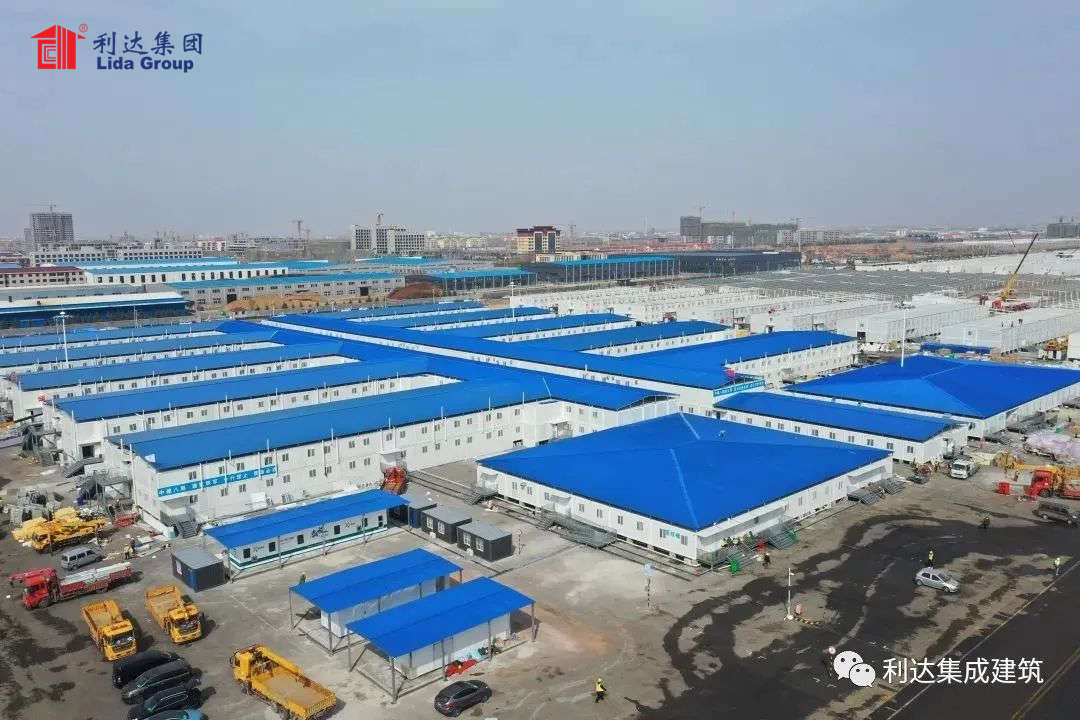
3. Technical Innovations in Prefab Office Containers
A. Climate Control Systems
Advanced HVAC and insulation technologies ensure comfort in extreme environments:
- Double-layered walls with 100mm polyurethane foam for thermal efficiency.
- Integrated dehumidifiers for coastal or humid regions.
- Solar-ready designs for off-grid operations, such as BP’s solar-powered containers in Oman.
B. Smart Technology Integration
IoT-enabled modular house units feature:
- Remote monitoring of air quality and temperature.
- Energy-efficient LED lighting with motion sensors.
- Pre-installed conduits for 5G connectivity, critical for real-time data transmission in remote fields.
C. Eco-Friendly Designs
Recycled materials and energy-saving features support ESG goals:
- Solar panels and wind turbines for hybrid power generation.
- Water recycling systems for arid regions like the Permian Basin.
4. Case Study: Offshore Drilling Operations in the North Sea
A major energy company replaced traditional site offices with 40 prefab office containers to support its North Sea platform. Key outcomes:
- Time Savings: Units were installed in 10 days vs. 6 months for conventional builds.
- Cost Reduction: 30% lower expenses due to reusable designs and reduced labor.
- Safety Enhancements: Fire-resistant walls and emergency exits improved compliance with North Sea safety protocols.
5. Prefab vs. Traditional Construction: A Cost-Benefit Analysis
| Factor | Prefab Office Containers | Traditional Construction |
|---|---|---|
| Deployment Time | 2–4 weeks | 6–12 months |
| Mobility | Fully relocatable | Fixed location |
| Customization | High (modular layouts) | Limited (fixed designs) |
| Lifespan | 15–25 years with maintenance | 30–50 years |
| Cost per m² | 400 | 1,000 |
For short- to medium-term projects, prefab containers offer unmatched ROI.
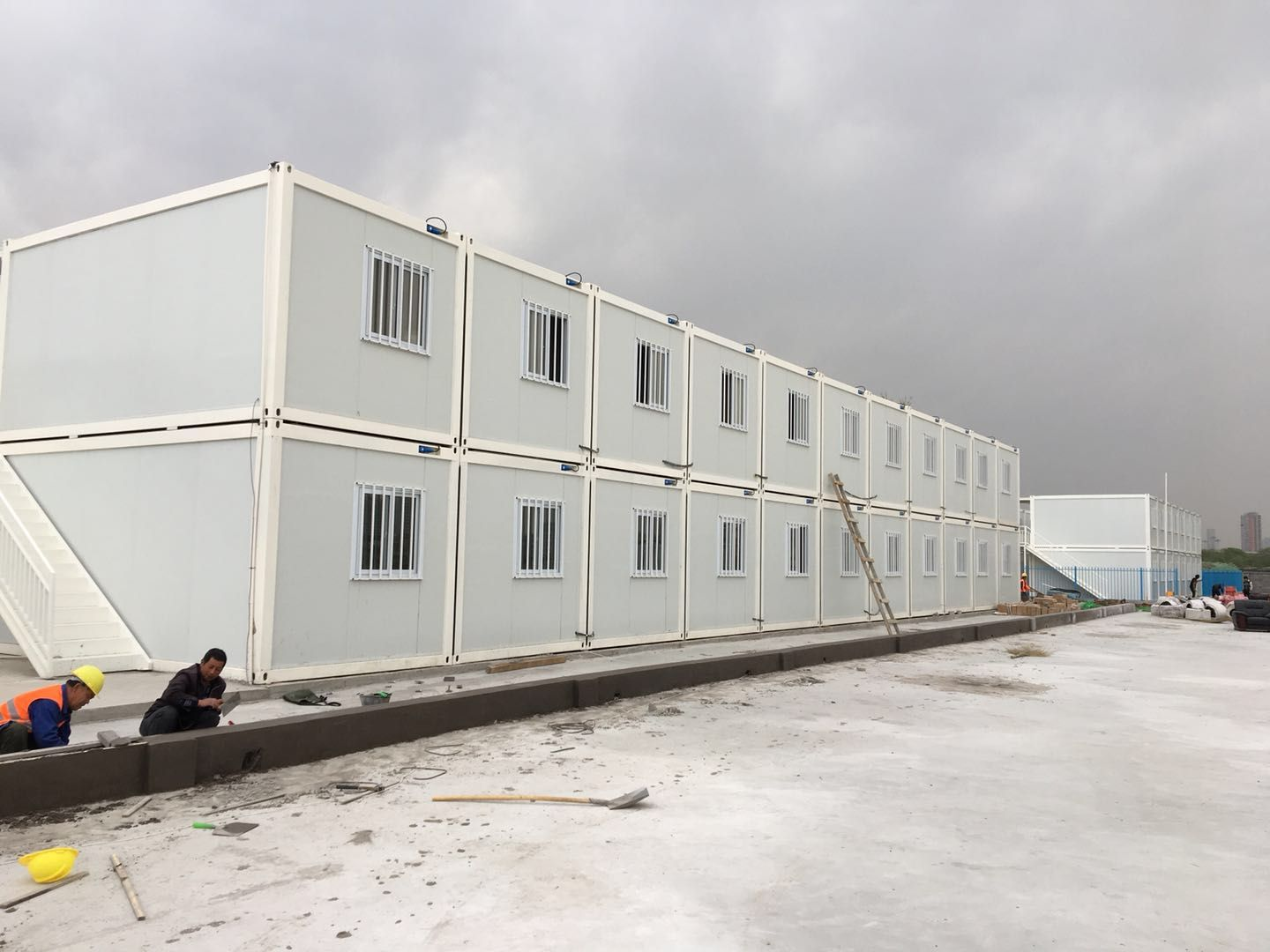
6. Future Trends: The Evolution of Container Buildings in Energy
- Hybrid Designs: Combining container house units with traditional materials for aesthetic appeal.
- AI-Driven Modular Systems: Predictive maintenance sensors to preempt equipment failures.
- Decarbonization: Hydrogen fuel cell integration for zero-emission field offices.
Conclusion
Prefab office container buildings are transforming oil and gas field operations by delivering adaptable, cost-effective, and resilient workspaces. As the industry faces mounting pressure to optimize costs and reduce environmental impact, these modular house solutions bridge the gap between functionality and sustainability. Whether for a temporary drilling site or a semi-permanent regional hub, prefab house designs are proving indispensable in powering the future of energy.
prefab house,modular house,constructions,oil
Contact Us
Head Office: 5th Floor,Building A,Darron Center,No.180,Haier Road,Qingdao, 266000,China
Tel: 0086-532-88966982 88965892 Fax:0086-532-88965571
WhatsApp:+86 13793209022
Mobile/Wechat:+86-15166671720
Email: sales@lidajituan.com Website: www.lidajituan.com
Alternate Website: www.lidamodularhouse.com

Head Office: 5th Floor,Building A,Darron Center,No.180,Haier
Road,Qingdao, 266000,China
Tel: 0086-532-88966982 88965892
Fax:0086-532-88965571
Email: sales@lidajituan.com
Website: www.lidajituan.com
Wechat/WhatsApp:+86-13793209022
Copyright(c)2023 All Rights Reserved SEO Business license