
Tel: 0086-532-88966982
0086-532-88965892
Website: www.lidajituan.com
E-mail: sales@lidajituan.com
Head office: 5th Floor, Building A, Darron Center, 180 Haier Road, Qingdao, 266000, China
Oil & Gas Warehouse Solutions: Modular vs. Prefab House Designs
Classification:Industry News
Release time:2025-03-28 08:00
Oil & Gas Warehouse Solutions: Modular vs. Prefab House Designs
Introduction: The Logistics Lifeline in Extreme Environments
In the Permian Basin, a warehouse storing $20 million worth of drilling equipment buckles under a sandstorm’s fury. Days later, a corroded storage unit on an offshore rig leaks toxic chemicals into the North Sea. These scenarios, once routine in the oil&gas industry, are being rewritten by a revolution in industrial architecture: modular and prefab house designs. But which approach reigns supreme for warehouses in the world’s most punishing environments? This article dissects the strengths, weaknesses, and game-changing innovations of modular and prefab warehouses, with insights from the frontlines of mining, offshore drilling, and desert operations.
1. Definitions: Modular vs. Prefab – What’s the Difference?
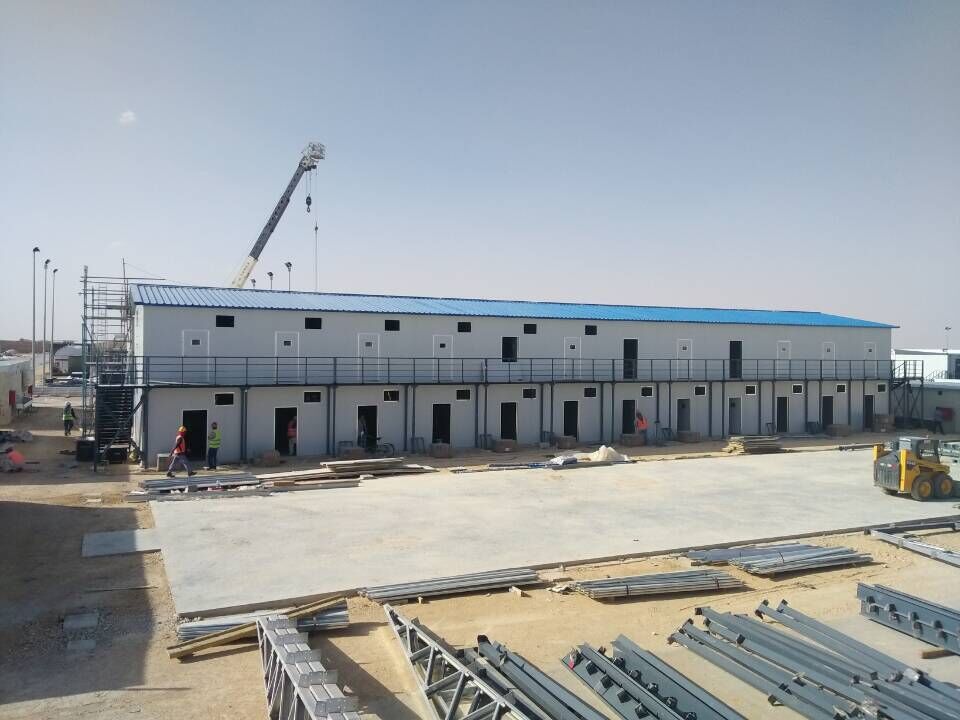
Modular Warehouses
- Design: Factory-built 3D modules (e.g., fully fitted walls, floors, roofs) assembled onsite.
- Scope: Ideal for large-scale, permanent structures like equipment storage hubs or workshop complexes.
- Example: Chevron’s 50,000 sq. ft. Gulf of Mexico warehouse, built from 200 steel modules.
Prefab Warehouses
- Design: Panelized 2D components (walls, roofs) shipped flat and assembled onsite.
- Scope: Suits smaller, semi-permanent needs—tool sheds, temporary labs, or T Model prefab building kits.
- Example: Shell’s Permian Basin “pop-up” warehouses for fracking gear.
Key Distinction: Modular = 3D volumetric units; Prefab = 2D flat-pack panels.
2. The Oil & Gas Warehouse Challenge
Oil&gas warehouses must withstand:
- Corrosion: Saltwater (offshore) or acidic fumes (refineries).
- Extreme Weather: Hurricane-force winds, -40°C Arctic cold, or 50°C desert heat.
- Dynamic Loads: Heavy machinery vibration, seismic shifts, or iceberg collisions.
Traditional warehouses often fail here, with 63% of operators reporting structural issues within 5 years (Deloitte, 2023).
3. Modular Warehouses: The Heavyweight Contender
Pros
- Speed: A 10,000 sq. ft. modular warehouse deploys in 6–8 weeks vs. 6+ months for traditional builds.
- Durability: Welded steel frames (e.g., T Model prefab building’s triangular truss system) handle 150 mph winds.
- Customization: BP’s Norwegian offshore warehouse integrates blast-resistant doors and methane detection systems.
Cons
- Cost: 200/sq. ft. vs. 120/sq. ft. for prefab.
- Transport: Oversized modules require permits and specialized trucks.
Case Study: ExxonMobil’s Guyana Offshore Hub
- Challenge: Store 300 tons of equipment on a floating platform.
- Solution: 40 modular units with hydraulic stabilizers and zinc-nickel coatings.
- Result: Zero corrosion incidents in 3 years; 30% faster equipment retrieval.
4. Prefab Warehouses: The Agile Alternative
Pros
- Affordability: 100/sq. ft. for basic models.
- Mobility: Flat-pack panels fit standard trucks; ideal for remote mining or exploration sites.
- Scalability: Add sections incrementally (e.g., Halliburton’s expandable Texas frack-sand depots).
Cons
- Limited Resilience: Prone to leaks in extreme weather; lifespan of 10–15 years vs. 25+ for modular.
- Labor-Intensive Assembly: Requires skilled onsite crews—a hurdle in regions like Siberia or the Congo.
Innovation Spotlight: T Model Prefab Building
- Triangular steel frames for 50% greater load capacity.
- Pre-installed utility channels cut wiring/plumbing time by 70%.
- Used in TotalEnergies’ solar-powered Sahara desert warehouses.
5. Head-to-Head: Critical Factors for Oil & Gas
| Factor | Modular Warehouse | Prefab Warehouse |
|---|---|---|
| Deployment Speed | 6–8 weeks | 2–4 weeks |
| Wind Resistance | Up to 150 mph | Up to 100 mph |
| Seismic Safety | 8.0 Richter scale | 6.5 Richter scale |
| Customization | High (blast walls, HVAC zones) | Moderate (limited to panel sizes) |
| Relocation Cost | 50,000 | 15,000 |
Source: Oil & Gas Facilities Journal, 2024
6. The Mining Parallel: Lessons from Extreme Terrain
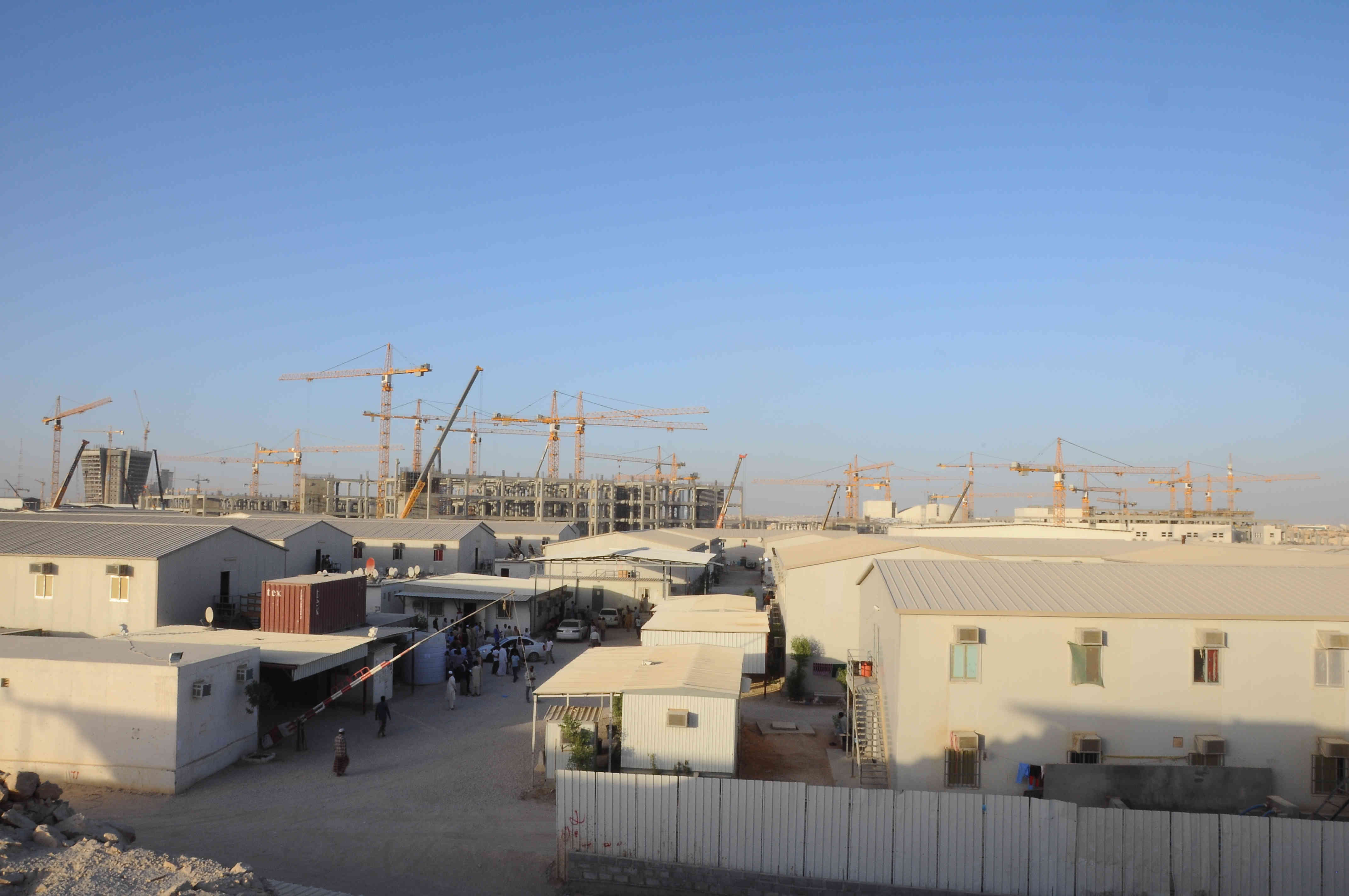
While focused on oil&gas, these solutions resonate with mining:
- Modular Dominance: BHP’s Pilbara iron ore mines use modular warehouses for 200-ton haul truck parts.
- Prefab Agility: Newmont’s Ghana gold mines deploy prefab units for cyanide storage, relocated as pits expand.
- T Model Crossover: Rio Tinto’s Mongolian copper mine adapted T Model designs for dust-proof workshop spaces.
7. Cost-Benefit Deep Dive
Modular ROI
- Upfront Cost: $1.5M for a 10,000 sq. ft. warehouse.
- Savings: 40% lower maintenance over 10 years; 25% energy savings via integrated insulation.
- Break-Even: 4–6 years for high-activity sites.
Prefab ROI
- Upfront Cost: $800K for same size.
- Savings: 60% cheaper relocations; 15% energy savings.
- Break-Even: 2–3 years for short-term projects.
Rule of Thumb: Modular for permanence; Prefab for flexibility.
8. Future Trends: Where Innovation Meets Industry
- Smart Warehouses: IoT sensors monitor humidity, corrosion, and inventory (Shell’s Brunei pilot).
- Hydrogen-Ready Designs: T Model prefab building prototypes include H2-compatible ventilation.
- Circular Economy: Recycled offshore rig steel repurposed into modular warehouses (Equinor’s North Sea initiative).
Conclusion: No One-Size-Fits-All – But a Formula for Success
The modular vs. prefab debate isn’t about picking a winner—it’s about aligning design with operational DNA. For oil&gas giants anchoring decade-long projects, modular warehouses offer fortress-like resilience. For wildcatters and explorers, prefab’s agility keeps costs lean and options open. And with innovations like the T Model prefab building bridging both worlds, the future of industrial storage is no longer just about surviving the elements—it’s about thriving in them.
prefab house,modular workshop,constructions,prefab building
Contact Us
Head Office: 5th Floor,Building A,Darron Center,No.180,Haier Road,Qingdao, 266000,China
Tel: 0086-532-88966982 88965892 Fax:0086-532-88965571
WhatsApp:+86 13793209022
Mobile/Wechat:+86-15166671720
Email: sales@lidajituan.com Website: www.lidajituan.com
Alternate Website: www.lidamodularhouse.com

Head Office: 5th Floor,Building A,Darron Center,No.180,Haier
Road,Qingdao, 266000,China
Tel: 0086-532-88966982 88965892
Fax:0086-532-88965571
Email: sales@lidajituan.com
Website: www.lidajituan.com
Wechat/WhatsApp:+86-13793209022
Copyright(c)2023 All Rights Reserved SEO Business license