
Tel: 0086-532-88966982
0086-532-88965892
Website: www.lidajituan.com
E-mail: sales@lidajituan.com
Head office: 5th Floor, Building A, Darron Center, 180 Haier Road, Qingdao, 266000, China
T Model Prefab Building Designs for Mining Workshop Constructions
Classification:Industry News
Release time:2025-03-27 14:43
T Model Prefab Building Designs for Mining Workshop Constructions
Introduction: Redefining Durability in Mining Infrastructure
In the arid expanse of Western Australia’s Pilbara region, a mining company faced a crisis: their traditional steel workshop, battered by relentless dust storms and 45°C heat, required constant repairs. The solution? A T Model prefab building—a next-generation modular design engineered to withstand the planet’s harshest conditions while slashing construction timelines. This article explores how T Model prefab systems are revolutionizing mining workshop constructions, offering unparalleled durability, scalability, and cost efficiency for an industry where downtime is measured in millions per hour.
1. What Sets T Model Prefab Buildings Apart?
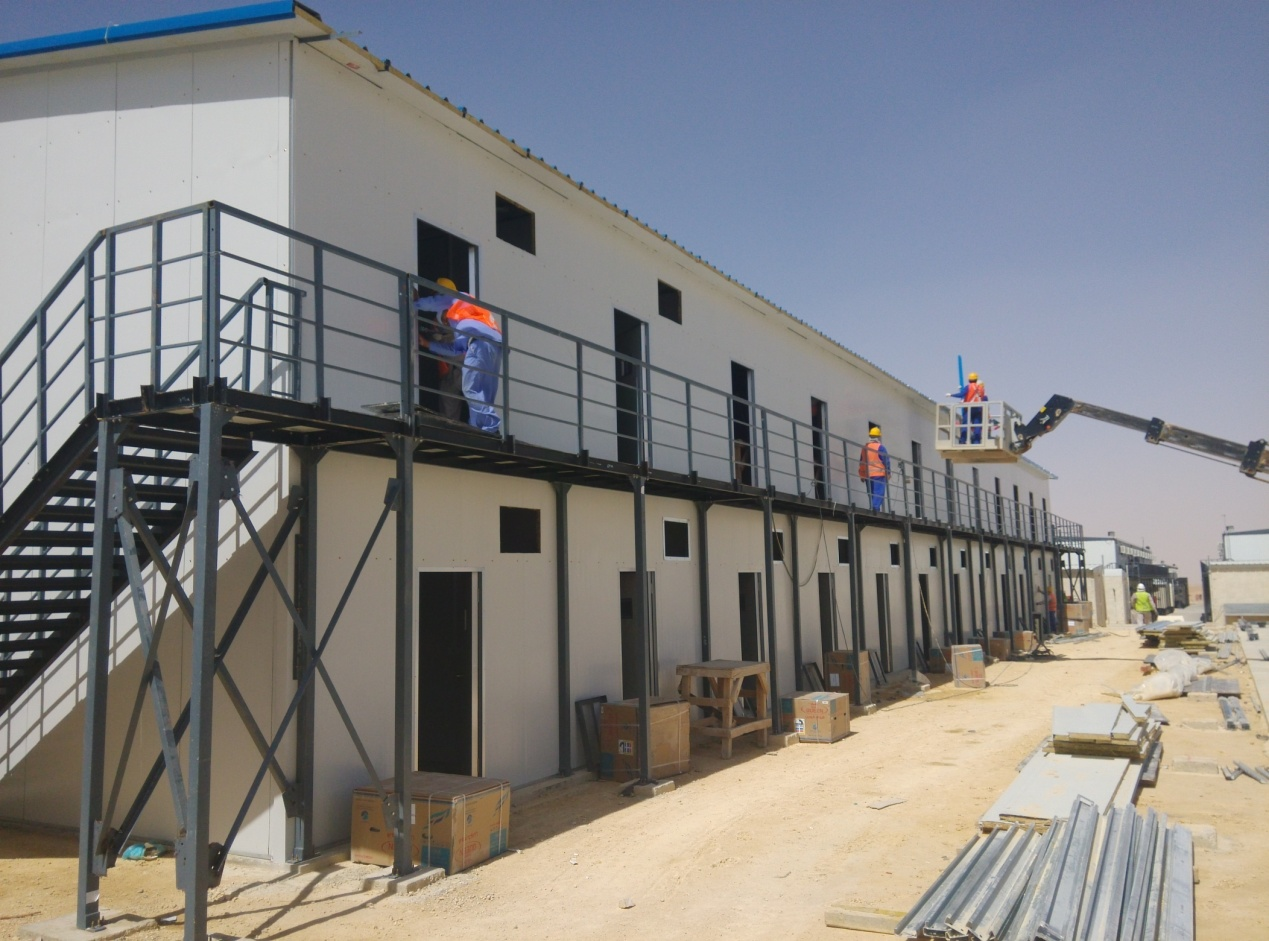
The T Model represents a leap forward in prefab house technology, tailored specifically for industrial applications. Its defining features include:
- Triangular Truss Framework: Inspired by aerospace engineering, the T Model’s triangular steel trusses distribute weight evenly, resisting deformation under heavy machinery or seismic stress.
- Modular Expandability: Units can be extended horizontally or vertically via bolt-on connectors, allowing mines to scale workshops as operations grow.
- Integrated Utility Channels: Pre-installed conduits for electrical, water, and ventilation systems, cutting on-site installation time by 60%.
Case Study: At a Chilean copper mine, a 5,000 sq. ft. T Model workshop was assembled in 12 days—a task that took 4 months with conventional constructions.
2. Engineering for Mining’s Extreme Demands
Mining workshops face unique challenges that generic modular house designs can’t address:
A. Structural Resilience
- Wind Resistance: T Model units withstand 150 mph winds (critical in open-pit mines like Mongolia’s Oyu Tolgoi).
- Corrosion Defense: Galvanized steel frames + ceramic nanoparticle coatings combat sulfurous air in gold processing sites.
- Fireproofing: A60-rated firewalls and intumescent paint meet ISO 834 standards for workshops near explosive materials.
B. Climate Control
- Dust Suppression: Positive-pressure HVAC systems with HEPA 14 filters, tested in Botswana’s diamond mines.
- Thermal Efficiency: Aerogel-insulated walls (U-value: 0.15 W/m²K) maintain 22°C interiors despite external extremes.
3. T Model vs. Traditional Prefab Workshops
| Feature | T Model Prefab Building | Standard Prefab Workshop |
|---|---|---|
| Assembly Time | 10–15 days | 30–60 days |
| Customization | Bolt-on expansions (no welding) | Limited to initial design |
| Maintenance Cost | 40% lower (self-healing coatings) | High (frequent repairs) |
| Lifespan | 30+ years | 15–20 years |
| Energy Efficiency | 50% reduction via solar-ready roofs | 20–30% reduction |
Source: Global Mining Prefab Alliance, 2023
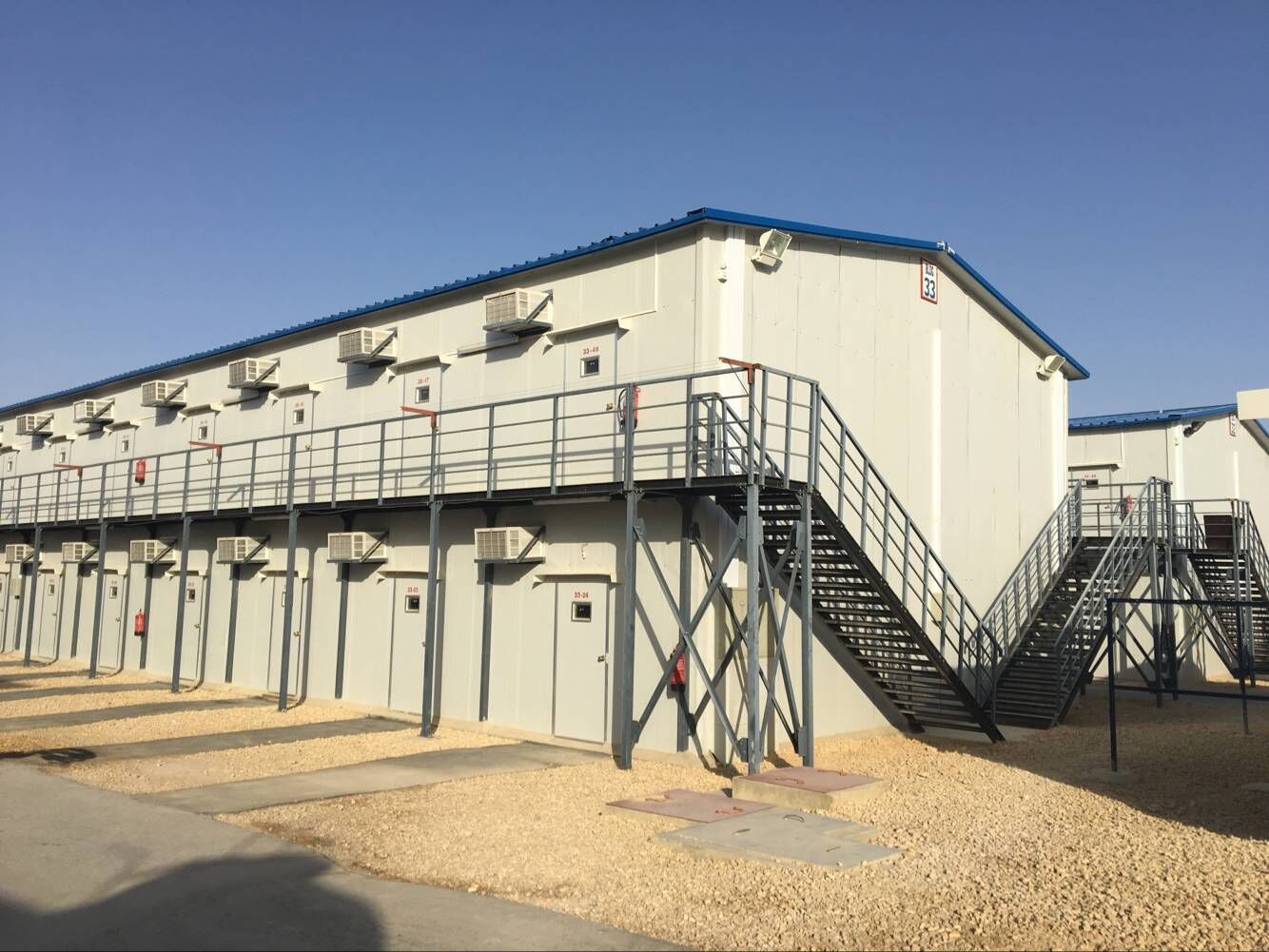
4. Case Study: From Desert to Diamond Mine
Project: De Beers’ Ghaghoo Mine, Botswana
Challenge: Build a 7,000 sq. ft. gemstone workshop in the Kalahari Desert, where sandstorms disable machinery and 50°C heat warps steel.
T Model Solution:
- Rapid Deployment: 18 pre-fitted modules airlifted and assembled in 14 days.
- Dust Management: Negative-ion air scrubbers kept particulate levels below 10 µg/m³.
- Energy Innovation: Solar-thermal panels powered polishing tools, cutting diesel use by 80%.
Outcome: Zero unplanned downtime in 2 years, saving $4.2M annually vs. old facilities.
5. The Oil & Gas Cross-Over: Lessons for Mining
While designed for mining, T Model principles are reshaping oil&gas logistics:
- Arctic Drilling Camps: T Model’s thermal efficiency suits Alaska’s Prudhoe Bay, where temps plunge to -40°C.
- Pipeline Warehouses: Modular units store valves and sensors along Kazakhstan’s Caspian pipelines.
- Explosion-Proof Labs: ATEX-certified T Model workshops analyze shale gas samples in Texas’ Permian Basin.
6. Cost-Benefit Analysis: Why Mines Are Switching
Upfront Costs
- T Model: 150 per sq. ft. (including HVAC and insulation).
- Traditional Build: 120 per sq. ft. (excluding $30/sq. ft. in overruns).
Lifetime Savings
- Maintenance: T Model’s self-healing epoxy coatings save $15/sq. ft. annually.
- Energy: Solar integration slashes power bills by 50–70%.
- Relocation: Units can be disassembled and reused, unlike fixed structures.
ROI: T Model pays for itself in 3–5 years for mid-sized mines.
7. Future-Proofing Mining Infrastructure
The T Model isn’t just a building—it’s a platform for innovation:
- AI Integration: Smart sensors predict equipment failures (Rio Tinto’s Pilbara pilot).
- Hydrogen Readiness: Pre-wired for H2 fuel cells, aligning with net-zero targets.
- Circular Design: 95% recyclable materials, from steel frames to mycelium insulation.
Conclusion: Building Smarter in the Age of Extraction
The T Model prefab building is more than a workshop—it’s a statement of resilience in an industry defined by extremes. By marrying aerospace-grade engineering with mining’s brutal realities, this design doesn’t just solve problems; it redefines what’s possible. As one site manager in Chile’s Atacama Desert remarked, “Our old workshop was a liability. The T Model? It’s a partner in profit.” For mines seeking to outpace the elements and outlast the competition, the T Model isn’t the future. It’s the now.
prefab house,modular house,mining,workshop
Contact Us
Head Office: 5th Floor,Building A,Darron Center,No.180,Haier Road,Qingdao, 266000,China
Tel: 0086-532-88966982 88965892 Fax:0086-532-88965571
WhatsApp:+86 13793209022
Mobile/Wechat:+86-15166671720
Email: sales@lidajituan.com Website: www.lidajituan.com
Alternate Website: www.lidamodularhouse.com

Head Office: 5th Floor,Building A,Darron Center,No.180,Haier
Road,Qingdao, 266000,China
Tel: 0086-532-88966982 88965892
Fax:0086-532-88965571
Email: sales@lidajituan.com
Website: www.lidajituan.com
Wechat/WhatsApp:+86-13793209022
Copyright(c)2023 All Rights Reserved SEO Business license