
Tel: 0086-532-88966982
0086-532-88965892
Website: www.lidajituan.com
E-mail: sales@lidajituan.com
Head office: 5th Floor, Building A, Darron Center, 180 Haier Road, Qingdao, 266000, China
How to Build a Prefab House for Harsh Environments: Oil & Gas Case Studies
Classification:Industry News
Release time:2025-03-31 00:00
How to Build a Prefab House for Harsh Environments: Oil & Gas Case Studies
The Unlikely Hero of Remote Energy Projects: Prefab Houses
Picture this: a team of engineers in northern Alberta, huddled in a makeshift trailer during a -40°C blizzard, sipping lukewarm coffee while debating how to house 200 workers for an oil sands expansion. Traditional construction? Impossible—the ground is frozen solid, and the nearest supplier is a 10-hour drive away. Helicoptering in materials? Budgets scream no. Then someone suggests, “What about prefab houses?”
This isn’t a hypothetical scenario. It’s how modular house designs have become the unsung heroes of oil&gas projects in Earth’s most unforgiving corners. Forget cookie-cutter suburban homes—these structures are engineered survival pods, blending military-grade durability with plug-and-play simplicity. Let’s break down how they’re built, why they work, and what the skeptics get wrong.
Rule 1: Embrace the “Lego Mindset”
Prefab homes for harsh environments aren’t just buildings—they’re kits of parts designed for chaos. Think:
- Standardized Panels: Interlocking wall systems that snap together like puzzle pieces, even with gloved hands.
- Pre-Installed guts: Wiring, plumbing, and insulation baked into modules before they’re shipped. No fiddling with pipes in a sandstorm.
- Flat-Pack Agility: Units that collapse for transport. In 2022, BP shipped 30 collapsible office container units to an Azerbaijani oil field via cargo planes—each unfolded into a 400 sq. ft. workspace in 90 minutes.
Case Study: The Arctic Circle Test
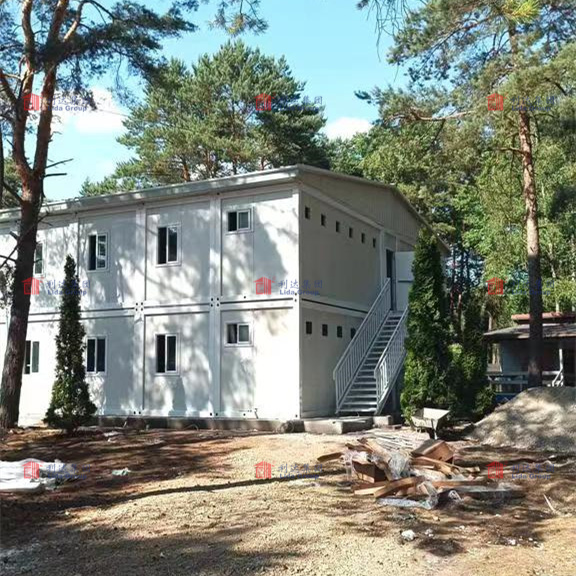
When a Russian LNG project needed housing on Yamal Peninsula permafrost, traditional concrete foundations cracked within weeks. The solution? A prefab house village anchored to screw piles, with raised floors to prevent thaw-induced sinking. Workers nicknamed them “igloos with Wi-Fi.”
Rule 2: Battleproof Your Materials
Harsh environments demand materials that laugh at Mother Nature’s worst:
The Anti-Corrosion Trifecta
- Corten Steel Exteriors: Let it rust—the patina actually seals the metal. Used in Norway’s offshore container building units, surviving North Sea salt spray.
- Aerogel Insulation: NASA-grade stuff, 90% air, thinner than a Mars bar. Keeps Siberian gas pipeline crews toasty at -55°C.
- Graphene-Enhanced Windows: Scratch-resistant, self-healing coatings that withstand flying debris in Saudi sandstorms.
The “Swiss Army Knife” Approach
Every component must multitask:
- Roofs double as solar panel mounts.
- Wall cavities hide water recycling tanks.
- Floors embed heated coils powered by waste gas from nearby rigs.
Pro Tip:
In Australia’s Pilbara mining region, modular house walls are stuffed with recycled glass wool from local bottles—cutting costs and carbon.
Rule 3: Design for the Apocalypse (and Boredom)
Remote oil&gas workers face two enemies: extreme weather and extreme monotony. Smart prefab designs tackle both:
Survival Mode
- Hurricane Straps: Units in Gulf of Mexico oil fields withstand 150 mph winds.
- Flood-Proof Elevation: Angola’s coastal rigs use hydraulic stilts to lift homes during storms.
- Firebreaks: In Canadian tar sands, fire-resistant container building clusters are spaced 50ft apart, with gravel moats.
Human Factor Hacks
- VR-Ready Interiors: Pre-wired for virtual reality lounges—Shell’s Alaskan crews use them for “mental escapes” during 6-month rotations.
- Modular Greenhouses: Plug-in hydroponic units for fresh veggies, like those at TotalEnergies’ Sahara desert site.
- Soundproof “Sanity Pods”: Solo relaxation cabins inspired by Antarctic research stations.
Rule 4: Steal from the Pros (and Avoid Their Mistakes)
Case Study 1: Kazakhstan’s Frozen Fiasco
In 2019, a Chevron team tried using standard prefab house units for a Tengiz oil field expansion. Problem? They ignored thermal bridging—cold seeped through wall joints, causing pipes to burst. The fix? Redesign with thermal break strips and triple-glazed windows. Cost: $2M. Lesson: Test prototypes onsite before mass production.
Case Study 2: Egypt’s Desert Win
BP’s West Nile Delta project needed housing for 500 workers fast. Solution: 100 modular house units with sand-filtering HVAC and rooftop misters. Secret sauce? Local labor assembled them using QR code-guided apps—cutting setup time by 60%.

Rule 5: Plan for the Afterlife
“Temporary” sites often outlive forecasts. Smart companies design for disassembly:
- Bolted, Not Welded: Schlumberger’s Nigerian units unscrew in 4 hours for redeployment.
- Landfill-Free Teardowns: Repurposed modules become schools (see Eni’s Mozambique gas project) or disaster relief housing.
- Blockchain Tracking: Shell tags each office container part with RFID chips, logging maintenance and carbon impact.
Why the Old Guard Gets It Wrong
Critics claim prefab homes are “flimsy” or “soulless.” Tell that to:
- Exxon’s Guyana Crews: Their modular jungle lodges feature local hardwood accents and monkey-proof waste systems.
- Equinor’s Floating Villages: Offshore Norway, wave-adaptive container building units house wind farm technicians—complete with saunas.
The Bottom Line
Building prefab houses for harsh oil&gas environments isn’t about cutting corners—it’s about cutting stupid. By merging hyperlocal adaptability with industrial efficiency, these structures do what traditional construction can’t: turn impossible deadlines into done deals, all while keeping crews alive (and sane). As one Alberta project manager put it: “Prefab isn’t the future. It’s the now.”
modular house,prefab house,container house,constructions
Contact Us
Head Office: 5th Floor,Building A,Darron Center,No.180,Haier Road,Qingdao, 266000,China
Tel: 0086-532-88966982 88965892 Fax:0086-532-88965571
WhatsApp:+86 13793209022
Mobile/Wechat:+86-15166671720
Email: sales@lidajituan.com Website: www.lidajituan.com
Alternate Website: www.lidamodularhouse.com

Head Office: 5th Floor,Building A,Darron Center,No.180,Haier
Road,Qingdao, 266000,China
Tel: 0086-532-88966982 88965892
Fax:0086-532-88965571
Email: sales@lidajituan.com
Website: www.lidajituan.com
Wechat/WhatsApp:+86-13793209022
Copyright(c)2023 All Rights Reserved SEO Business license