
Tel: 0086-532-88966982
0086-532-88965892
Website: www.lidajituan.com
E-mail: sales@lidajituan.com
Head office: 5th Floor, Building A, Darron Center, 180 Haier Road, Qingdao, 266000, China
Prefab Steel Structure Warehouses for Oil & Gas Storage Solutions
Classification:Company News
Release time:2025-03-28 21:00
Prefab Steel Structure Warehouses for Oil & Gas Storage Solutions
Introduction: The Oil & Gas Storage Revolution
In the Permian Basin, a hurricane-force wind tears through a traditional brick-and-mortar warehouse, destroying $3 million worth of drilling equipment. Days later, a corroded storage unit at an offshore Gulf of Mexico rig leaks toxic chemicals, triggering a costly shutdown. These scenarios underscore a harsh reality: conventional storage solutions are failing the oil&gas industry. Enter prefab steel structure warehouses—engineered to withstand extreme environments while slashing costs and timelines. This article explores how these innovative structures are redefining storage logistics for energy giants, from desert oilfields to Arctic drilling sites.
1. Why Oil & Gas Demands Prefab Steel Warehouses
The oil&gas sector faces unique storage challenges:
- Harsh Environments: Saltwater corrosion, hurricane winds, desert heat, and Arctic cold.
- Rapid Deployment: Exploratory projects require storage within weeks, not months.
- Safety Compliance: Explosion-proof designs for volatile material storage.
- Relocation Needs: Mobile units for shifting drilling sites.
Traditional warehouses, with 6–12-month build times and 25% annual maintenance costs, can’t keep up.
2. The Prefab Steel Structure Advantage
A. Speed & Scalability
- Factory Precision: 80% of components (columns, panels, roofing) prefabricated off-site.
- On-Site Assembly: A 10,000 sq. ft. steel structure warehouse deploys in 3–6 weeks vs. 8–12 months for concrete.
- Modular Expansion: Bolt-on extensions let operators scale storage as projects grow.
Case Study: ExxonMobil’s Guyana offshore project used prefab steel warehouses to store 500 tons of equipment, completing assembly in 18 days during hurricane season.
B. Durability in Extreme Conditions
- Corrosion Resistance: Hot-dip galvanized steel (275g/m² zinc coating) withstands coastal salt spray and acidic fumes.
- Wind Resilience: Aerodynamic designs rated for 150 mph winds (tested in Shell’s Gulf of Mexico facilities).
- Fireproofing: A60-rated firewalls and intumescent paint meet API 2218 standards for flammable material storage.
C. Cost Efficiency
| Cost Factor | Prefab Steel Warehouse | Traditional Warehouse |
|---|---|---|
| Construction Cost | 70/sq. ft. | 120/sq. ft. |
| Maintenance | 5–10% of initial cost/year | 15–25% of initial cost/year |
| Lifespan | 30–50 years | 20–40 years |
| Relocation Cost | 30,000 | $100,000+ (often scrapped) |
Source: Energy Facilities Cost Report, 2024
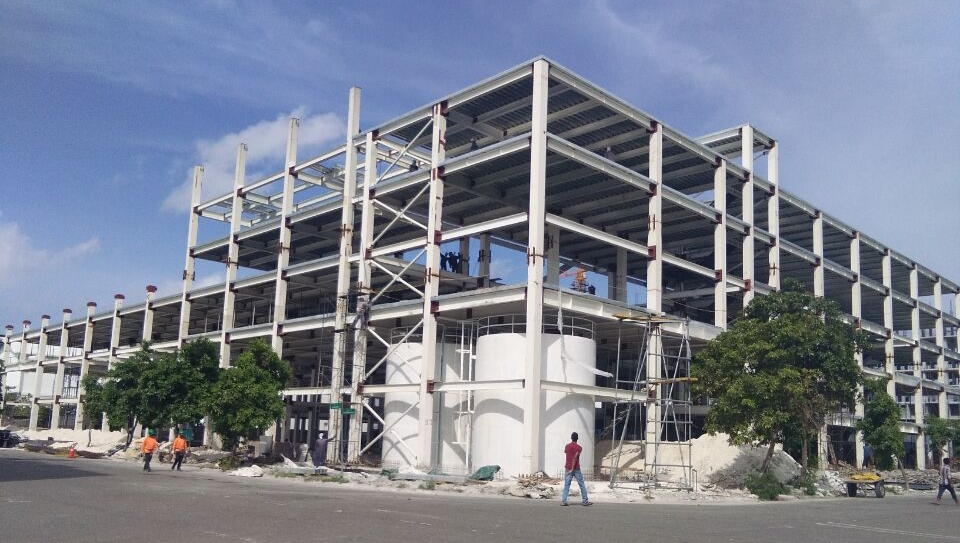
3. Customized Designs for Oil & Gas Workflows
A. Hazardous Material Storage
- Explosion-Proof Zones: Steel compartments with blast-resistant doors and methane sensors (modeled after BP’s Texas City refinery).
- Ventilation Systems: Negative-pressure airflow to prevent toxic fume buildup.
B. Heavy-Duty Logistics
- Crane-Ready Roofs: Reinforced steel beams for overhead cranes (e.g., Chevron’s Permian Basin pipe storage).
- Climate Control: Insulated panels maintain -20°C to 45°C interiors for sensitive electronics.
C. Mobility & Flexibility
- Skid-Mounted Units: Portable warehouses for fracking sites, mounted on sled bases for Arctic deployments.
- Stackable Modules: Multi-level designs maximize vertical space on cramped offshore rigs.
4. Case Study: TotalEnergies’ Sahara Desert Triumph
Challenge: Store 700 tons of solar farm equipment in Algeria’s Sahara, where sandstorms degrade traditional structures within months.
Solution:
- Prefab Steel Warehouse: Galvanized steel panels with sand-resistant silicone seals.
- Solar-Ready Roof: Pre-installed PV panel mounts powered cooling systems.
Results: - Zero corrosion or dust infiltration after 3 years.
- 40% lower energy costs vs. diesel-dependent units.
- Relocated twice to new drill sites at 1/5th the cost of rebuilding.
5. Prefab Steel vs. Traditional Construction: A Head-to-Head Breakdown
| Factor | Prefab Steel Warehouse | Traditional Warehouse |
|---|---|---|
| Build Time | 3–6 weeks | 8–12 months |
| Wind Resistance | Up to 150 mph | Up to 100 mph |
| Customization | High (modular add-ons) | Limited (fixed designs) |
| Carbon Footprint | 12 kg CO2/sq. ft. (recycled steel) | 22 kg CO2/sq. ft. (concrete) |
6. The Mining Crossover: Shared Innovations
While tailored for oil&gas, prefab steel structures benefit mining:
- Dust-Proofing: Sealed panel joints prevent silica dust ingress in gold processing workshops.
- Arctic Adaptations: Insulated floors prevent permafrost thaw (tested in Norilsk Nickel’s Siberia mines).
- Relocatable Offices: Modular steel units double as modular house camps for remote exploration teams.
7. Future Trends: Smarter, Greener, Stronger
- AI Integration: IoT sensors monitor structural health and inventory (Shell’s Brunei pilot).
- Green Steel: Hydrogen-reduced steel cuts embodied carbon by 75% (ArcelorMittal’s XCarb® initiative).
- Self-Healing Coatings: Nano-ceramic layers repair scratches (2025 rollout planned by Tata Steel).
Conclusion: Steel’s Unshakable Role in Energy Logistics
For oil&gas companies navigating volatile markets and climate mandates, prefab steel warehouses aren’t just storage—they’re strategic assets. Faster to deploy, cheaper to maintain, and tougher than any alternative, these structures are rewriting the rules of energy logistics. As a project manager at Saudi Aramco’s Ghawar Field put it, “Our steel warehouses don’t just store equipment—they safeguard profits.” In an era where efficiency equals survival, steel isn’t an option; it’s the answer.
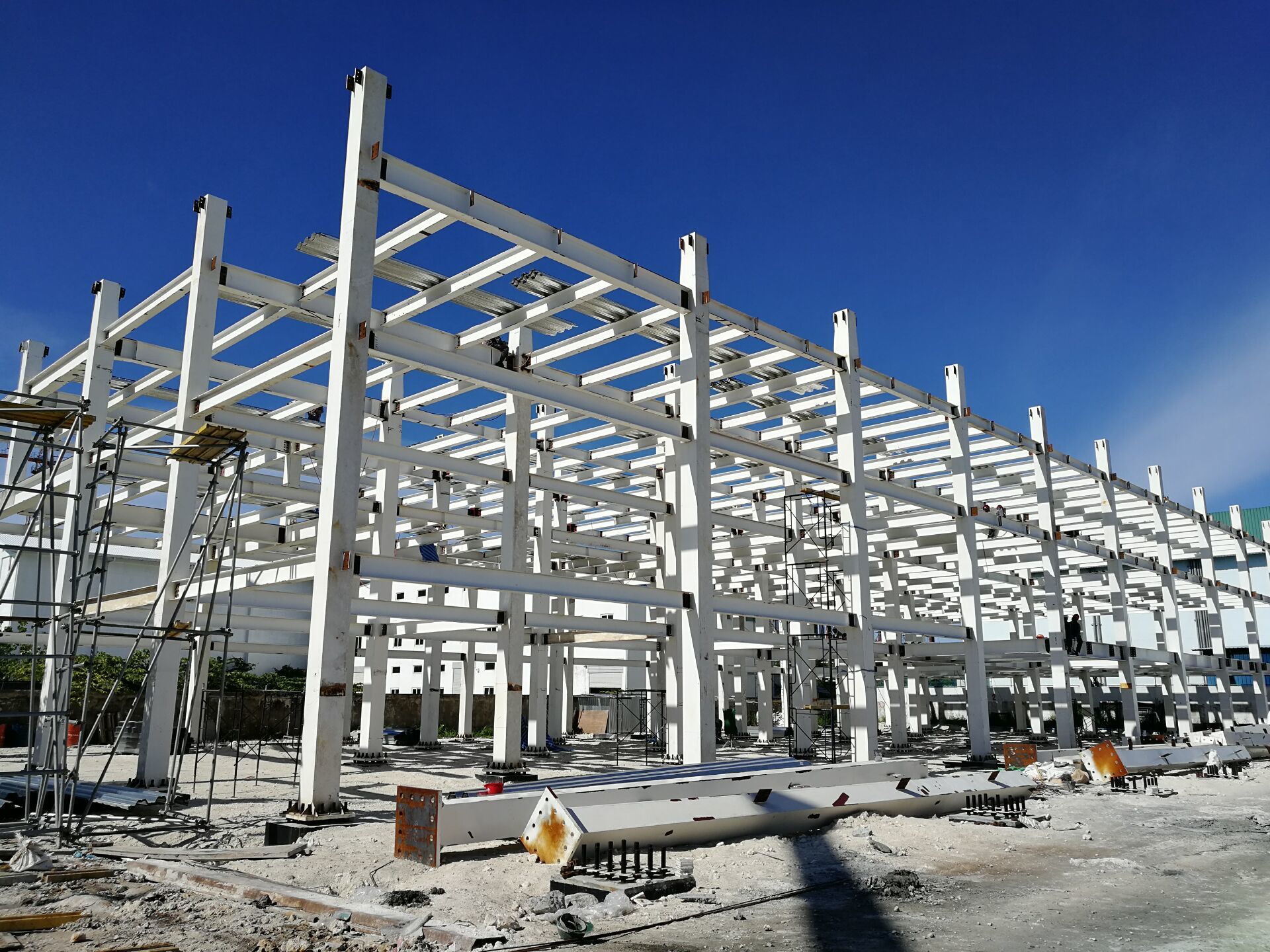
heavy steel structure,modular house,constructions,mining
Contact Us
Head Office: 5th Floor,Building A,Darron Center,No.180,Haier Road,Qingdao, 266000,China
Tel: 0086-532-88966982 88965892 Fax:0086-532-88965571
WhatsApp:+86 13793209022
Mobile/Wechat:+86-15166671720
Email: sales@lidajituan.com Website: www.lidajituan.com
Alternate Website: www.lidamodularhouse.com

Head Office: 5th Floor,Building A,Darron Center,No.180,Haier
Road,Qingdao, 266000,China
Tel: 0086-532-88966982 88965892
Fax:0086-532-88965571
Email: sales@lidajituan.com
Website: www.lidajituan.com
Wechat/WhatsApp:+86-13793209022
Copyright(c)2023 All Rights Reserved SEO Business license