
Tel: 0086-532-88966982
0086-532-88965892
Website: www.lidajituan.com
E-mail: sales@lidajituan.com
Head office: 5th Floor, Building A, Darron Center, 180 Haier Road, Qingdao, 266000, China
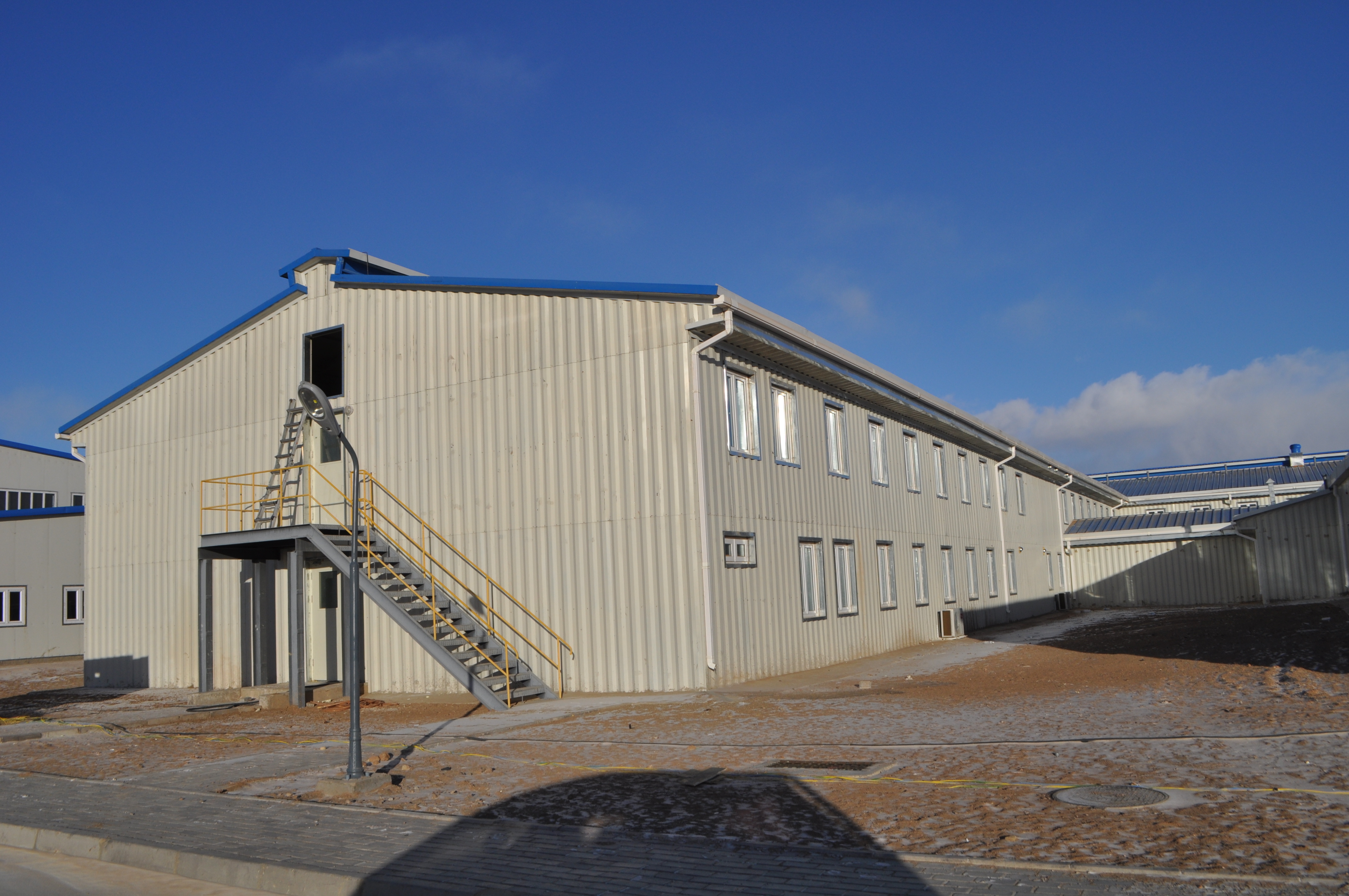
Cost-Effective Steel Structure Constructions: Modular Warehouses for Mining
Classification:Industry News
Release time:2025-03-30 00:00
Cost-Effective Steel Structure Constructions: Modular Warehouses for Mining
Introduction: The Mining Industry’s Warehouse Revolution
In Chile’s Atacama Desert, a copper mine faces a logistical nightmare: its traditional concrete warehouse, crumbling under seismic activity and corrosive dust, costs $500,000 annually in repairs. Meanwhile, a gold mine in Ghana’s rainforest struggles to relocate storage units as exploration shifts to new pits. The solution? Modular steel structure warehouses—engineered to slash costs, withstand extremes, and adapt to mining’s relentless demands. This article explores how cost-effective steel constructions are reshaping mining logistics, offering durability and flexibility in the world’s most unforgiving environments.
1. Why Mining Needs Modular Steel Warehouses
Mining operations face unique challenges that traditional constructions fail to address:
- Remote Locations: Sites lack infrastructure for lengthy builds.
- Harsh Conditions: Acidic air, seismic zones, and temperature extremes degrade concrete and timber.
- Budget Pressures: Capital-intensive projects demand leaner upfront and lifetime costs.
- Scalability: Storage needs fluctuate with exploration phases and production cycles.
Steel structure warehouses solve these issues through:
- Prefabrication: 70–80% built off-site, minimizing on-site labor.
- Corrosion Resistance: Hot-dip galvanized steel (275g/m² zinc coating).
- Modularity: Bolt-on expansions or relocations as mines evolve.
2. The Cost Efficiency Blueprint
A. Upfront Savings
- Material Optimization: Light steel structures use 30% less material vs. traditional builds.
- Labor Reduction: Pre-assembled panels cut on-site work by 60%.
- Transport: Flat-pack modules fit standard trucks, costing 50,000 for oversized concrete forms.
B. Lifetime Savings
- Maintenance: Self-healing coatings extend repaint cycles to 15+ years.
- Energy Efficiency: Insulated panels (U-value: 0.25 W/m²K) cut HVAC costs by 40%.
- Relocation: Units can be disassembled and reused, saving $300,000+ per move.
| Cost Factor | Modular Steel Warehouse | Traditional Warehouse |
|---|---|---|
| Construction Time | 8–12 weeks | 9–18 months |
| Material Costs | 65/sq. ft. | 120/sq. ft. |
| Maintenance Cost/Year | 5/sq. ft. | 15/sq. ft. |
| Lifespan | 30–50 years | 20–30 years |
Source: Global Mining Cost Report, 2024

3. Engineering for Mining’s Brutal Realities
A. Environmental Resilience
- Corrosion Defense: Graphene-enhanced coatings combat sulfuric acid fumes in copper processing zones.
- Seismic Stability: Base isolation systems absorb shocks up to 7.5 Richter (tested in Peru’s copper belt).
- Thermal Control: Vacuum-insulated panels (VIPs) maintain -30°C to 50°C interiors.
B. Customized Workflows
- Heavy-Duty Flooring: Steel-reinforced concrete floors (500 PSI) support drilling equipment.
- Dust Suppression: Positive-pressure HVAC systems with HEPA 14 filters (modeled after oil&gas cleanrooms).
- Hazardous Zones: Fireproof compartments for explosive storage (A60-rated walls).
4. Case Study: Rio Tinto’s Pilbara Iron Ore Triumph
Challenge: Replace a collapsing concrete warehouse in Australia’s Pilbara region, where 50°C heat and cyclones wreak havoc.
Solution:
- Modular Steel Warehouse: 12,000 sq. ft. prefab structure with solar-reflective roofing.
- Rapid Assembly: 90% built off-site; on-site completion in 10 weeks.
- Smart Features: IoT sensors monitor structural stress and inventory.
Results: - 50% lower upfront costs vs. traditional build.
- Zero maintenance in 3 years despite extreme conditions.
- Relocated during mine expansion at 20% the cost of new construction.
5. Modular vs. Traditional: A Mining-Centric Comparison
| Factor | Modular Steel Warehouse | Traditional Warehouse |
|---|---|---|
| Build Speed | 2–4 months | 1–2 years |
| Customization | High (modular add-ons) | Limited (fixed design) |
| Durability | Resists corrosion, quake damage | Prone to cracks, rot |
| Sustainability | 95% recyclable materials | 30–40% recyclable |
6. Oil & Gas Cross-Over: Shared Innovations
Lessons from oil&gas enhance mining warehouses:
- Explosion-Proofing: ATEX-certified electrical systems from offshore rigs.
- Mobility: Skid-mounted designs for Arctic oilfields redeployed to mines.
- Fire Safety: Intumescent coatings tested in refineries.
7. Future Trends: Smarter, Greener, Leaner
- AI Integration: Predictive maintenance algorithms flag corrosion risks (BHP’s Jansen mine pilot).
- Circular Materials: Steel sourced from recycled mining equipment (Anglo American’s 2025 pledge).
- Hydrogen Power: Warehouses pre-wired for H2 fuel cells (Fortescue’s Green Pioneer project).
Conclusion: Steel’s Reign in Mining Logistics
For mining companies, modular steel structure warehouses aren’t just storage—they’re strategic investments. Faster to deploy, cheaper to maintain, and tougher than any alternative, these buildings redefine cost efficiency in an industry where margins are razor-thin. As one logistics manager at Newmont’s Boddington mine remarked, “Our steel warehouse isn’t a cost center—it’s our competitive edge.” In the race to optimize and adapt, modular steel isn’t the future; it’s the present.
steel structure,modular warehouse,mining,cost-effective constructions
Contact Us
Head Office: 5th Floor,Building A,Darron Center,No.180,Haier Road,Qingdao, 266000,China
Tel: 0086-532-88966982 88965892 Fax:0086-532-88965571
WhatsApp:+86 13793209022
Mobile/Wechat:+86-15166671720
Email: sales@lidajituan.com Website: www.lidajituan.com
Alternate Website: www.lidamodularhouse.com

Head Office: 5th Floor,Building A,Darron Center,No.180,Haier
Road,Qingdao, 266000,China
Tel: 0086-532-88966982 88965892
Fax:0086-532-88965571
Email: sales@lidajituan.com
Website: www.lidajituan.com
Wechat/WhatsApp:+86-13793209022
Copyright(c)2023 All Rights Reserved SEO Business license